This material is available in other languages:
ru
24 Jun 2026
UN Calls for the Release of Indigenous Rights Defenders Darya Egereva and Natalia Leongardt
- What Happened
- The Charges
- Pre-Trial Detention, Isolation and Procedural Violations
- The UN’s Position
- Demands to the Russian Authorities
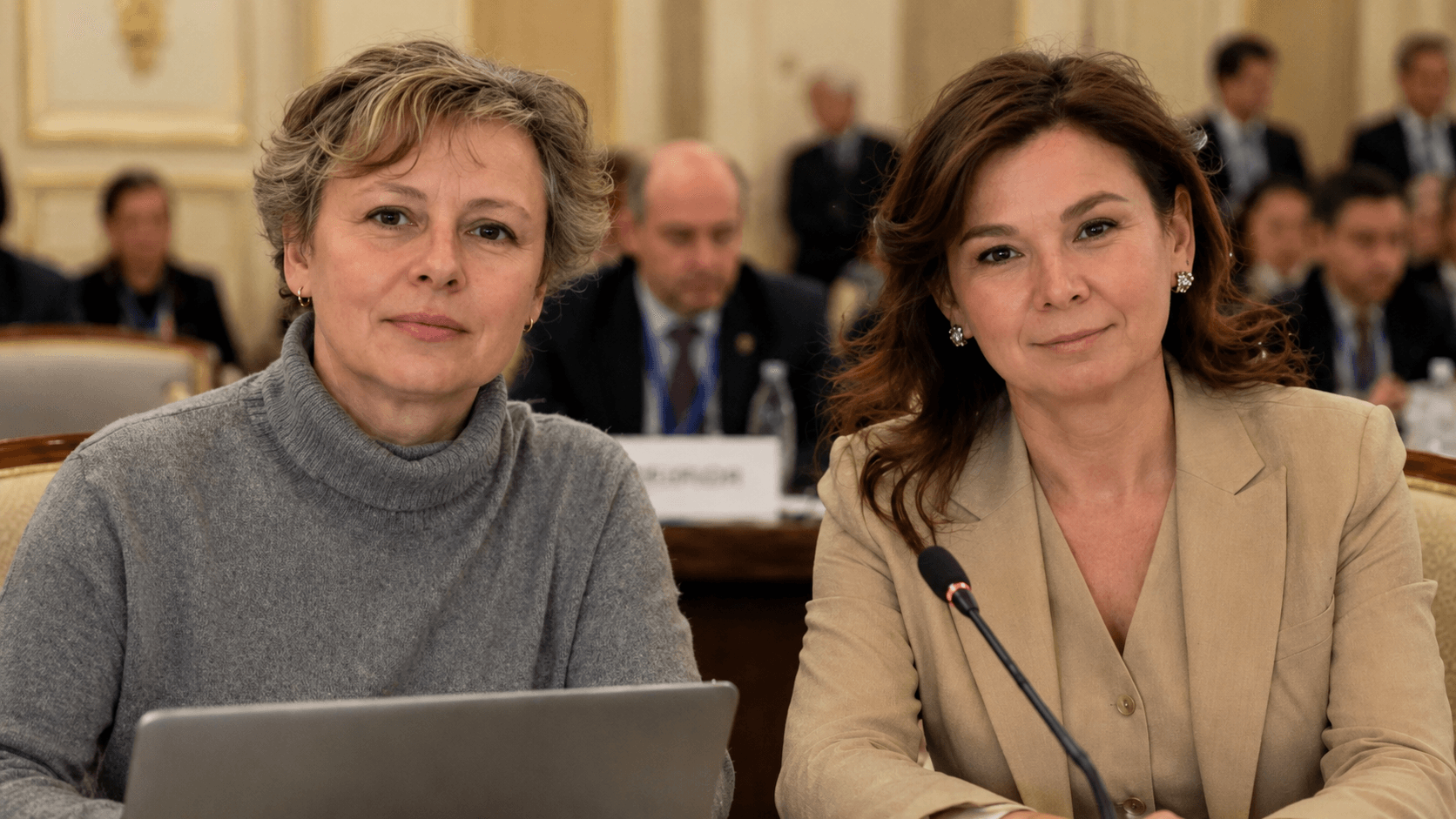
On 7 April 2026, ten UN Special Rapporteurs and representatives of UN Working Groups sent an official communication to the Russian Government, which was made public on 6 June. The experts called for the release of two Indigenous rights defenders, Darya Egereva and Natalia Leongardt. They stressed that the activists are being unlawfully prosecuted for their peaceful human rights work and engagement with the United Nations.
What Happened
Darya Egereva is one of Russia’s most prominent Indigenous leaders and a defender of the rights of the Selkup people, a small Indigenous community in Tomsk Region. She has played a leading role in international diplomacy. She served as co-chair of the official Indigenous Peoples’ constituency within the United Nations Framework Convention on Climate Change (UNFCCC) and regularly took part in high-level negotiations.
Natalia Leongardt, her colleague, has long supported Indigenous activists from different regions of Russia and helped them engage with international institutions.
On 13 December 2025, Darya Egereva returned to Russia from the UN Climate Conference (COP30) in Brazil.
Four days later, on 17 December, officers of the Federal Security Service (FSB) carried out coordinated raids, searches and interrogations targeting at least 17 Indigenous activists across six regions of Russia, from Yakutia to Murmansk Region.
The same day, security forces detained Egereva and Leongardt and confiscated their electronic devices.
The authorities charged both human rights defenders with “participation in the activities of a terrorist organisation” under Article 205.5, Part 2 of the Russian Criminal Code. The charge carries a sentence of between 10 and 20 years’ imprisonment.
The Charges
According to investigators, the women’s alleged terrorist activity consisted of participating in the work of the “Aborigen Forum”, an informal association of independent Indigenous experts from the North, Siberia and the Far East.
The prosecution has provided no evidence that either activist participated in the Forum. The Forum had already ceased its activities after being designated “extremist”.
During the summer and autumn of 2024, Russian courts held closed proceedings in which they designated a number of civil society organisations first as “extremist” and later as “terrorist”. The authorities added the Aborigen Forum to the list without presenting any evidence linking it to terrorism.
The human rights defenders maintain that their work has been entirely peaceful.
Pre-Trial Detention, Isolation and Procedural Violations
Since their arrest, the activists have been held in Moscow’s Detention Centre No. 6. Courts have repeatedly extended their pre-trial detention, most recently until 15 June 2026.
In its communication, the UN documents serious violations of the right to a fair trial.
- Hearings on pre-trial detention are held behind closed doors, with even family members barred from attending.
- Defence lawyers are denied access to procedural documents, preventing them from preparing an effective defence.
- Darya Egereva is systematically denied phone calls and visits from her husband and children. The only opportunity she had to see her husband was during a court hearing, but prison convoy officers prevented any communication between them.
The UN’s Position
The UN Special Rapporteurs leave no doubt about the political nature of the case. Their communication explicitly states that the prosecution is unlawful:
“The information received strongly suggests that the prosecution of Darya Egereva may constitute acts of intimidation and reprisals for engaging with the United Nations, its representatives, and its human rights mechanisms.”
The experts emphasise that the actions of the Russian authorities amount to serious violations of the International Covenant on Civil and Political Rights (ICCPR), to which Russia is a party. Under international law, detention for the peaceful exercise of freedom of expression and freedom of association is arbitrary.
The rapporteurs also stress that the case against Egereva and Leongardt is not an isolated incident but part of a broader pattern of repression.
“The case fits into a broader trend in Russia of misusing national and public security legislation, including laws related to counter-terrorism and extremism, to suppress civil society, including Indigenous activists.”
The experts further note that applying severe anti-terrorism provisions to individuals who have committed no acts of violence is inconsistent with the principles of proportionality and legality.
Demands to the Russian Authorities
UN representatives call on the Russian Government to:
- Immediately release Darya Egereva and Natalia Leongardt and drop all charges against them.
- Ensure that the activists can continue their lawful work.
- Clarify the legal basis for holding closed court proceedings and for designating Indigenous organisations as “terrorist”.